|Regulatory Framework for Digital Currency Legislation
Despite differences in legal requirements across countries/territories, stablecoins are commonly defined as crypto assets pegged to cash and cash equivalents to maintain value and utilize distributed ledger technology for trades/transfers and storage, all electronically.
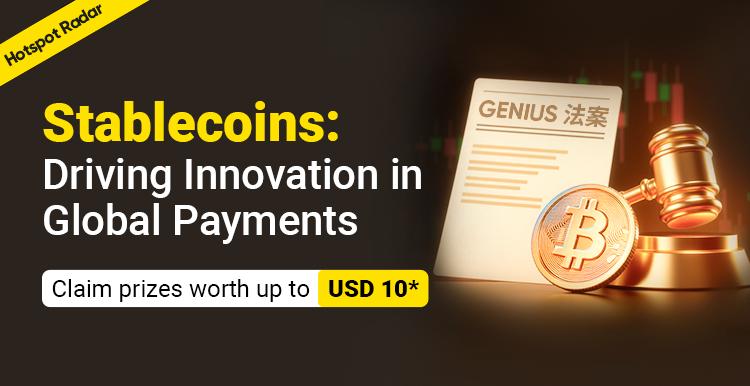
Notably, the European Union's "Markets in Crypto-Assets "(MiCA) regulation, which includes specific provisions for stablecoins, officially came into effect on June 30, 2024. In addition, Hong Kong's "Stablecoin Regulations "draft bill is scheduled to be implemented on August 1, 2025.
US (GENIUS Act):Federal or state regulatory regime applies dependant on the value of the outstanding tokens and the availability of a Stablecoin Certification Review Committee (SCRC) in that state.Only US dollar assets-backed payment-type stablecoins are allowed, with 100% reserve of highly liquid assets (cash, short-term US Treasury bonds), and interest/dividend payments are prohibited.The circulation of foreign stablecoins in the US market to meet SCRC’s standards.Room for Innovation?
Currently restricts financial attributes (such as interest) and limits them for payments.
European Union (MiCA Framework):TThe European Banking Authority (EBA) and the European Securities and Markets Authority (ESMA) are the regulatory bodies with each EU member state responsible for their specific implementation of supervision. EMT (E-Money Token) issuers need to comply with liquidity requirements, and ART (Asset-Referenced Token) issuers need capital reserve requirements. Applicable throughout the entire European Union.Allows EMT innovation but strictly excludes algorithmic stablecoins and security tokens.
Hong Kong, China (Stablecoin Regulations):The Hong Kong Monetary Authority (HKMA) is the licence issuing and Anti Money Laundering supervisory body. Allows multi-currencies anchoring (HKD, USD, offshore RMB, etc.), with a minimum paid-up capital of HKD 25 million, and 100% reserve of high-quality, highly liquid current assets. Covers overseas issuers whose offerings are pegged to the Hong Kong dollar or activities promoted to the Hong Kong public. Currently restricts financial attributes (such as interest) and limits them for payments.
Source: 五矿证券-五矿证券稳定币:技术革新重构全球支付体系;中邮证券-中邮证券金工专题报告:稳定币应用场景及行业研究
|Rise of Stablecoin Concept Stocks
1.The leader in the stablecoin market
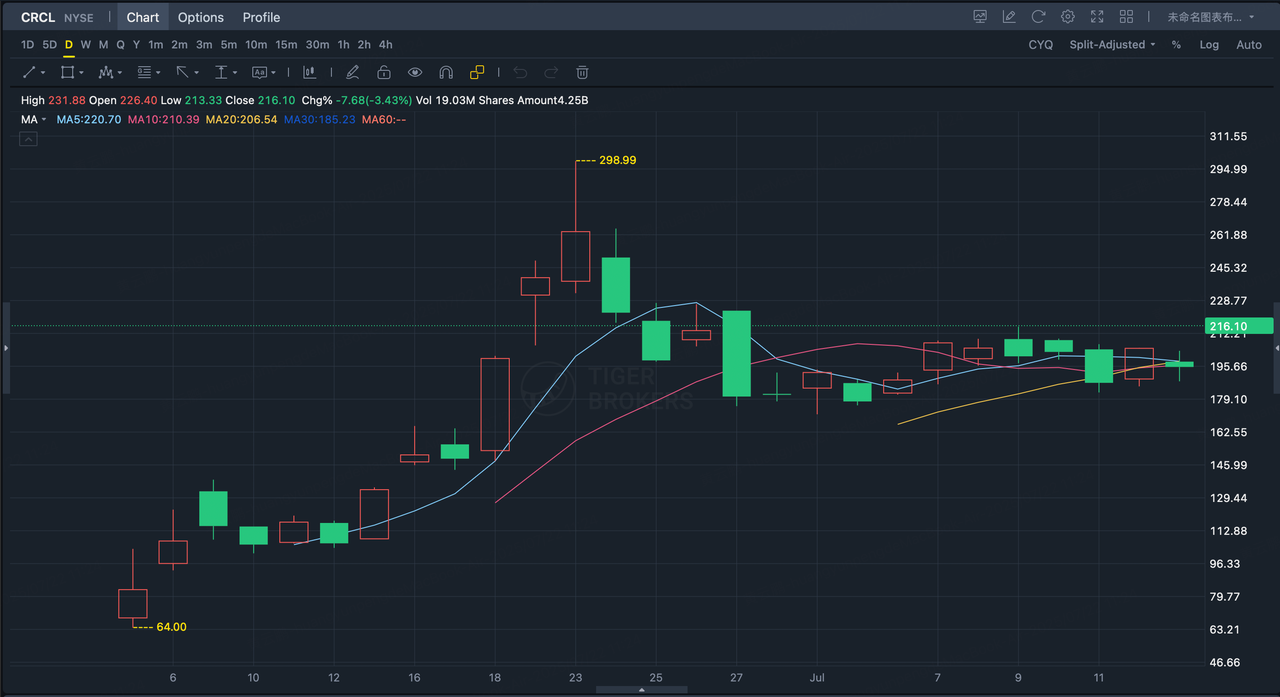
Circle Internet Group (Stock Code: CRCL) is widely recognized by many as a leader in the stablecoin market due to its issuance of USDC, one of the largest fiat-backed stablecoins known for strong compliance and transparency standards. Circle became a publicly traded company in 2021 through a merger, marking it as one of the first major stablecoin issuers listed on a public exchange.
Since then, Circle’s stock has attracted significant investor interest, reflecting optimism about the growing adoption of stablecoins and their role in the broader financial ecosystem. However, stock performance has been subject to market fluctuations, and investors should be aware that regulatory scrutiny and competition from other stablecoins represent ongoing challenges. These factors could impact both USDC’s market position and Circle’s financial outlook moving forward.
Source: Tiger Trade July 15, 2025
2.Leading U.S. Exchange in the Stablecoin Sector
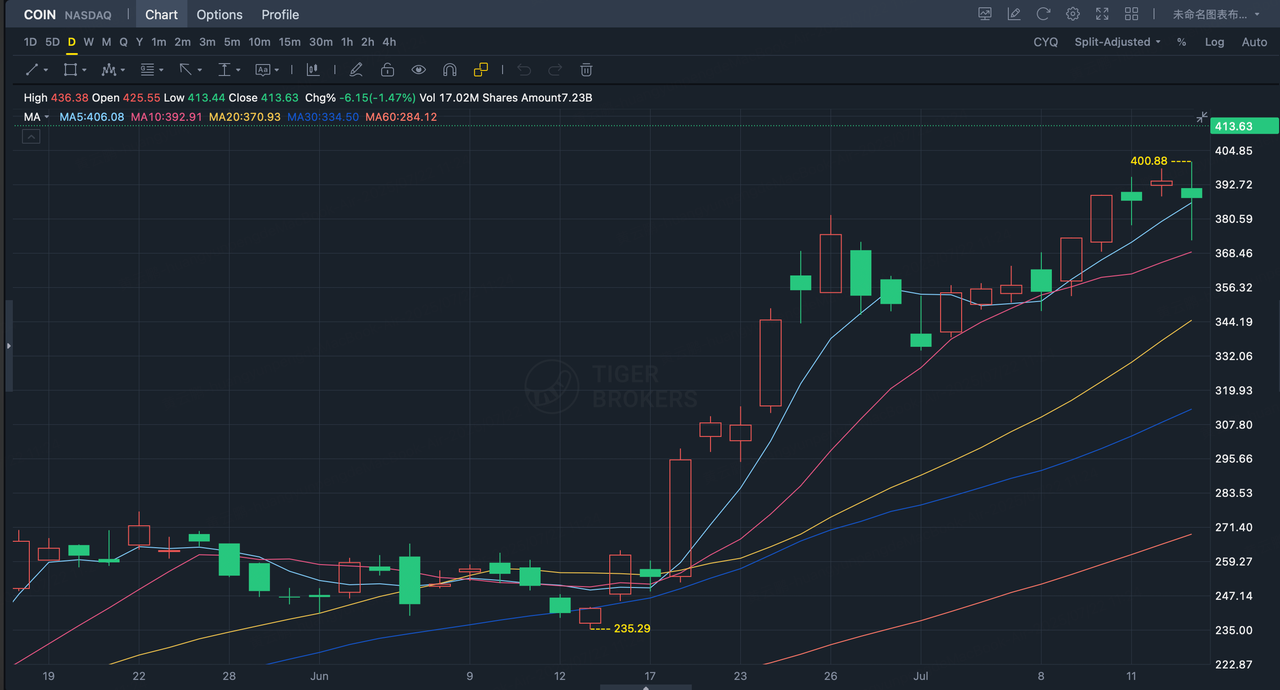
Coinbase Global (Stock code: COIN), the largest cryptocurrency exchange in the United States, has made notable strides in the stablecoin space. Its diversified operations span payments, cross-border remittances, and asset tokenisation. However, Coinbase faces several notable risks, including regulatory uncertainty, crypto market volatility, inconsistent profitability, growing competition, technological vulnerabilities, and the early-stage nature of its innovative ventures, which may limit short-term returns. Following the passage of the GENIUS Act, Coinbase’s stock has experienced notable growth, rising around 60% to a peak of $400.88 intraday as of July 15, 2025.
Note: *Past performance is subject to market volatility and is not a guarantee of future results.
Source: Tiger Trade July 15, 2025
3.Response of Hong Kong Stock-related Concept Stocks
In the Hong Kong stock market, stocks with stablecoin themes have also been sought after by investors. For example, SINOHOPE TECH Holdings (stock code: 01611.HK ), dubbed the "Hong Kong version of Coinbase", Hong Kong chain reform pioneer, takes part in Security Token Offerings (STO), Web3 wallet and Real World Asset (RWA) pilot, and closely aligns with the Hong Kong government's Web3 policy initiatives. It is worth noting that the business is highly focussed on cryptocurrency’s trading and asset management accounting for approximately 97%* of the company’s revenue. This heavy reliance makes it highly susceptible to price volatility in the crypto market and uncertainties in global regulatory policies. A decline in the prices of Bitcoin or Ethereum or a tightening of regulations could have an immediate impact on the company’s profitability. The stock price surged sharply from around the HK$2 level in June to an intraday peak of HK$5.52 on 14 July 2025.
Note: *Past performance is subject to market volatility and is not a guarantee of future results.
Note: *Past performance is subject to market volatility and is not a guarantee of future results.
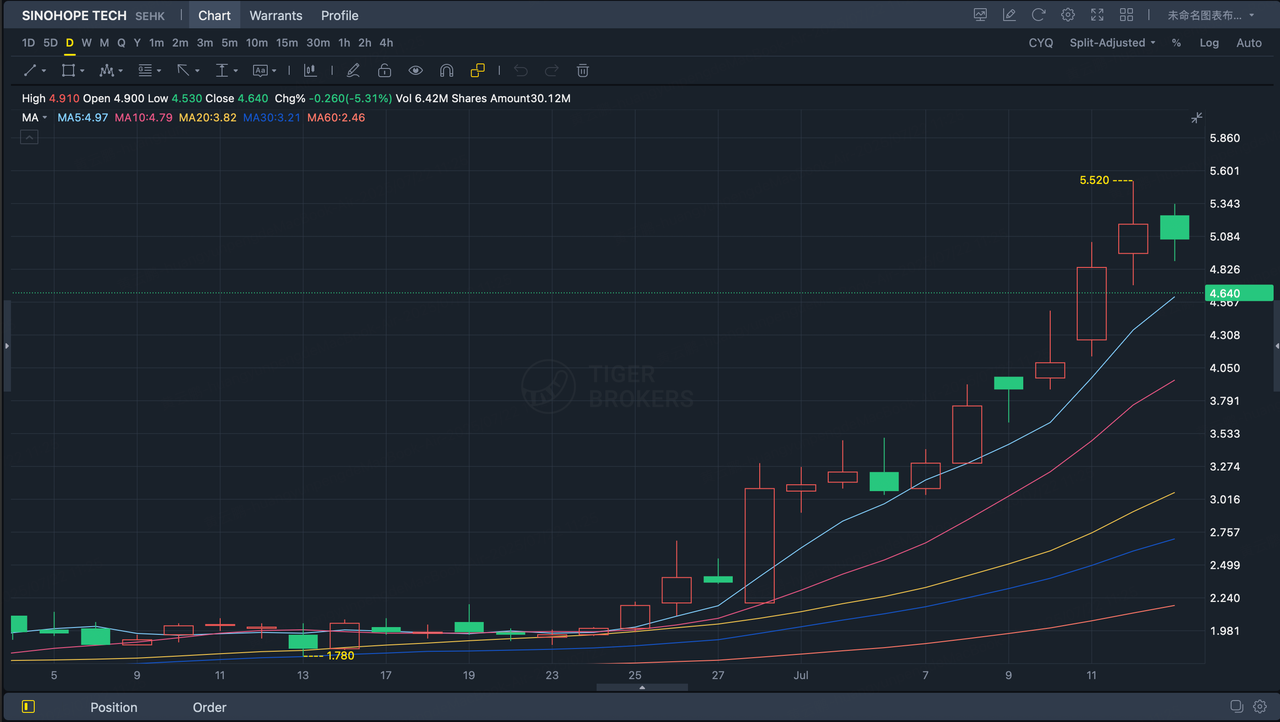
Source: Tiger Trade July 15, 2025
|Derivative Assets of Stablecoins ——Real World Assets (RWA)
RWA refers to physical or traditional financial assets—such as real estate, bonds, other receivables, or commodities—that are tokenized on a blockchain.
The increase in the trading volume of stablecoins has simultaneously led to an increase in the stock of stablecoins. However, since stablecoins do not pay interest, asset tokenization (RWA) has emerged to meet the income needs of stablecoin traders/investors. By tokenizing real-world assets (such as private equity, bonds, funds, commodities, etc.), it provides a new investment avenue for stablecoin traders/investors. The revenue sources of asset tokenization services for stablecoins are similar to those of the asset management industry, mainly including management fees, sales fees, and custody fees.
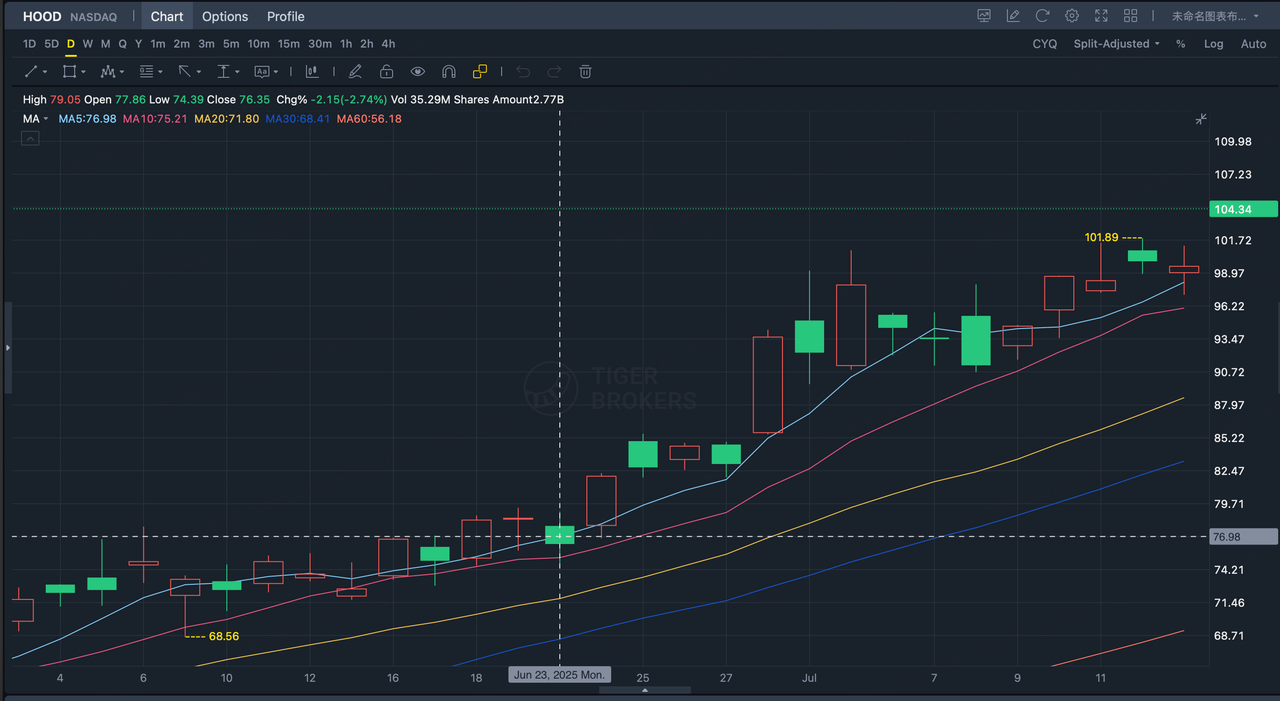
With the advancement of the GENIUS Act, the clarification of stablecoin policies, and the expansion of tokenized assets such as on-chain US Treasuries, it is expected to guide the migration of traditional financial assets worth trillions of dollars to the blockchain. In this "upgrade of digital asset infrastructure," Robinhood’s (stock code: HOOD) existing blend of a cryptocurrency trading and a traditional securities broking seems to have a natural advantage for it to a bridge those two businesses for RWA.
The company relies heavily on cryptocurrency trading, payment for order flow (PFOF) revenue, and interest income. As a result, it faces ongoing regulatory scrutiny, volatility in the crypto market, pressure from major competitors, and potential operational or security issues with its platform. Consequently, its profitability and stock price are significantly impacted by challenges related to policy, market dynamics, and technology risk management.
Source: Tiger Trade July 15, 2025
2.Digital Asset Trading Infrastructure
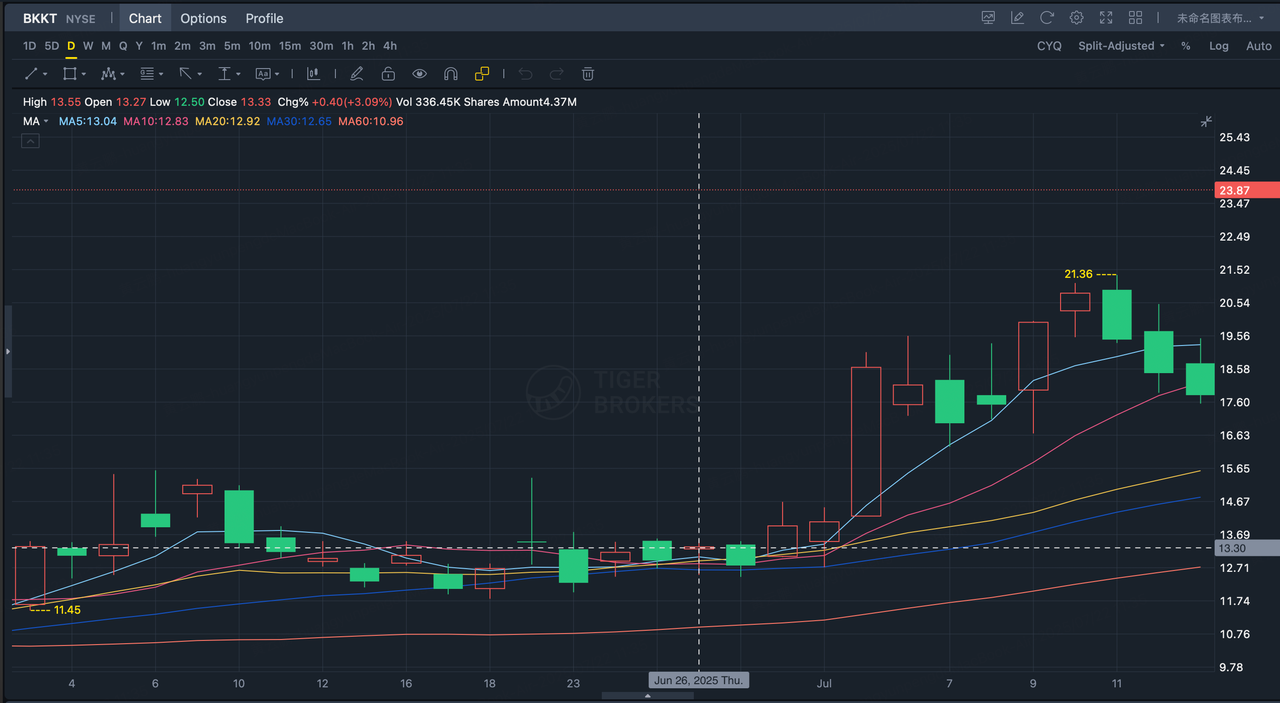
Bakkt Holdings Inc. (ticker: BKKT) was founded in 2018 by the parent company of the New York Stock Exchange and is regarded as a foundational builder of compliant institutional DeFi infrastructure. However, its dependence on a limited number of major clients contributes to notable earnings volatility. As of July 11, BKKT’s stock intraday peak reached $21.36.
Note: *Past performance is subject to market volatility and is not a guarantee of future results.
Source: Tiger Trade July 15, 2025
|The Quietly Growing Coin Hoarding
As cryptocurrencies and stablecoins gain attention, some companies have started holding significant amounts of these digital assets long-term. This practice, often called crypto hoarding, involves using available funds or raising capital to purchase cryptocurrencies, sometimes to benefit from market growth and regulatory differences.
MicroStrategy Inc. (ticker: MSTR) is a well-known example. The company converted much of its cash into Bitcoin, and its stock price has seen notable increases since 2020, reflecting Bitcoin’s price changes.
However, holding large amounts of cryptocurrency carries risks. Prices can be highly volatile, which may affect a company’s financial stability. Issuing new shares or bonds to fund these purchases can impact existing shareholders and the company’s financial structure. Additionally, regulatory and legal uncertainties around digital assets remain.
This process typically involves raising capital, purchasing crypto assets, and potentially benefiting from price changes, creating a cycle that can amplify both potential gains and risks.
Note: *Past performance is subject to market volatility and is not a guarantee of future results.
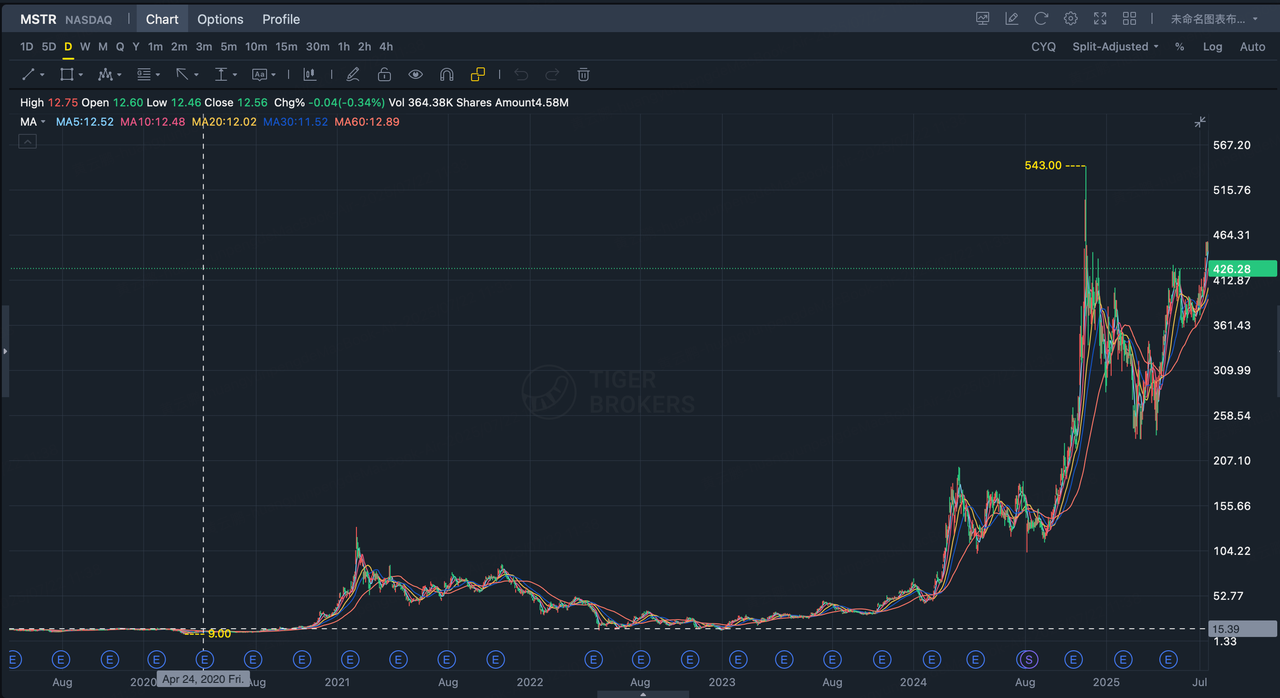
Source: Tiger Trade July 15, 2025
|cStablecoin Concept Company
As Hong Kong is building a "blockchain-based financial centre" with stablecoins/RWA, the US’ setting its blockchain standards through legislation, followed by other governments’ involvement around the world, perhaps the current stage is merely the starting point of stablecoin development.
Although stablecoins are rapidly developing and have become a key component of crypto finance, there are still several uncertainties:
• Regulatory Risk: Regulations vary across countries. The U.S. is proposing new rules, which could impact product design and operations.
• Technical and Compliance Risk: Asset transparency and data auditability must be ensured. A loss of peg or fund misappropriation could trigger a crisis of confidence.
• Market Risk: Some Hong Kong and U.S. related stocks are highly influenced by crypto assets’ volatility, leading to potentially significant short-term price fluctuations.