Common Options Strategies for Market Pullbacks and Rebounds
1. Bullish on the Market? Looking to Buy the Dip.
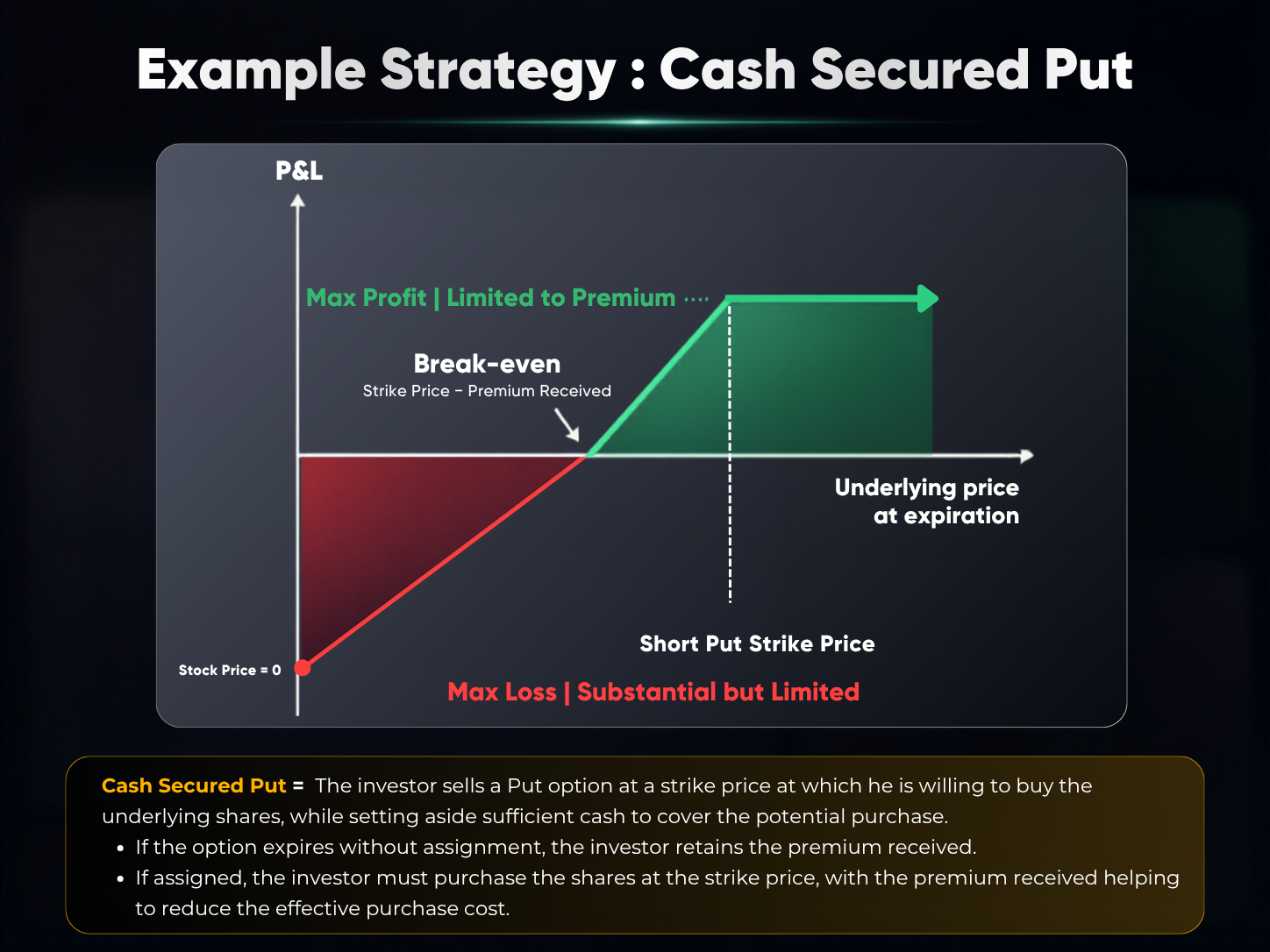
Example Strategy: Cash-Secured Put
Typical Position: An investor holding sufficient cash to purchase the underlying shares if assigned.
Investment Goal: Collect option premiums while potentially buying shares at a preferred price.
Key Risk: If the share price falls significantly, you may still be required to purchase the shares at the strike price. The premium received provides only a partial offset against potential losses, which could substantially exceed the premium collected.
2. Expecting a Sideways Market or Mild Rebound?
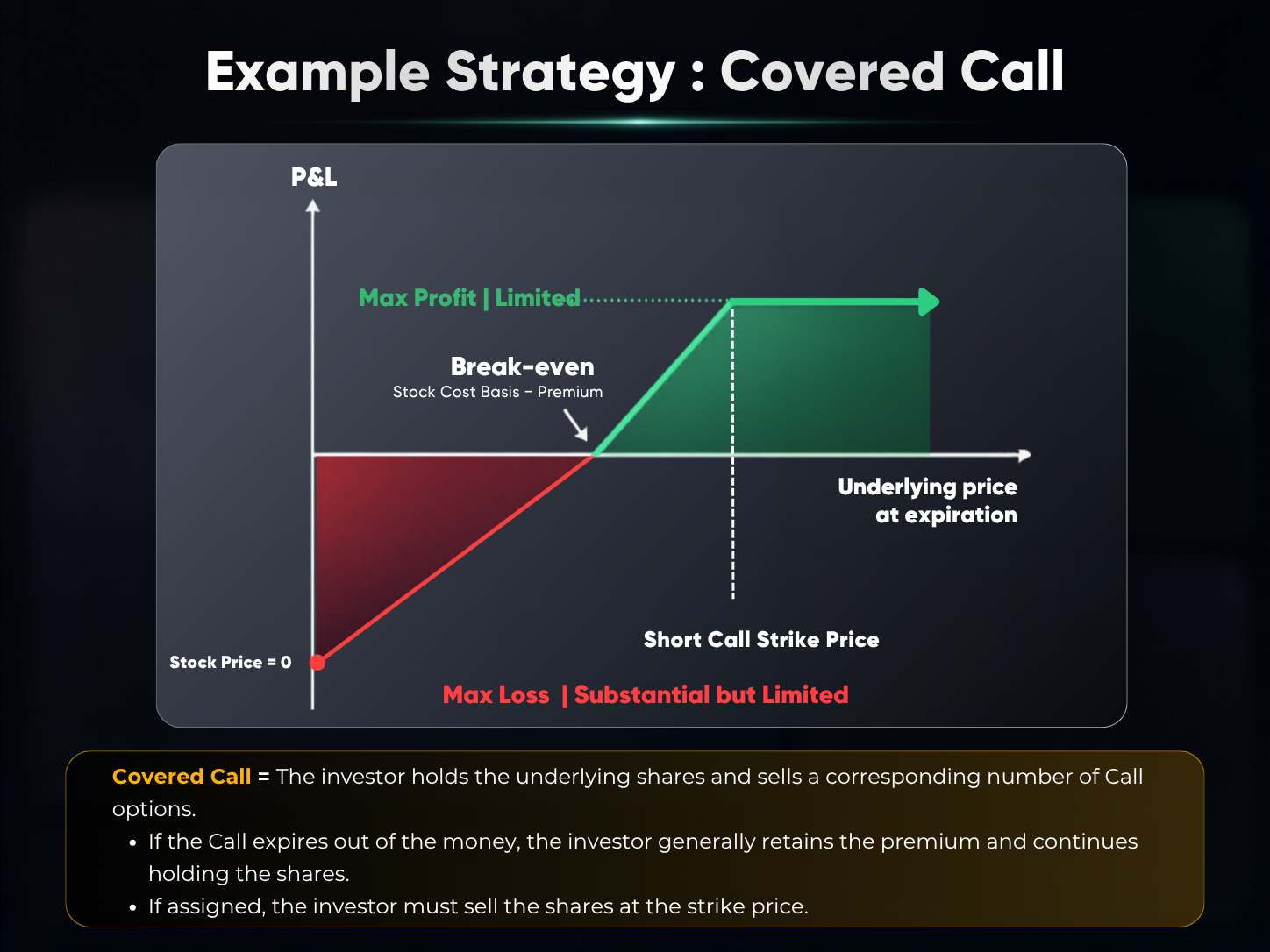
Example Strategy: Covered Call
Typical Position: An investor already holding the underlying shares and willing to sell them at a predetermined price.
Investment Goal: Generate additional premium income while holding shares.
Key Risk: Your potential upside is capped, while downside risk from holding the shares remains. The premium received may not be sufficient to offset losses if the share price declines.
3. Concerned About Further Declines or a Pullback After a Rebound?
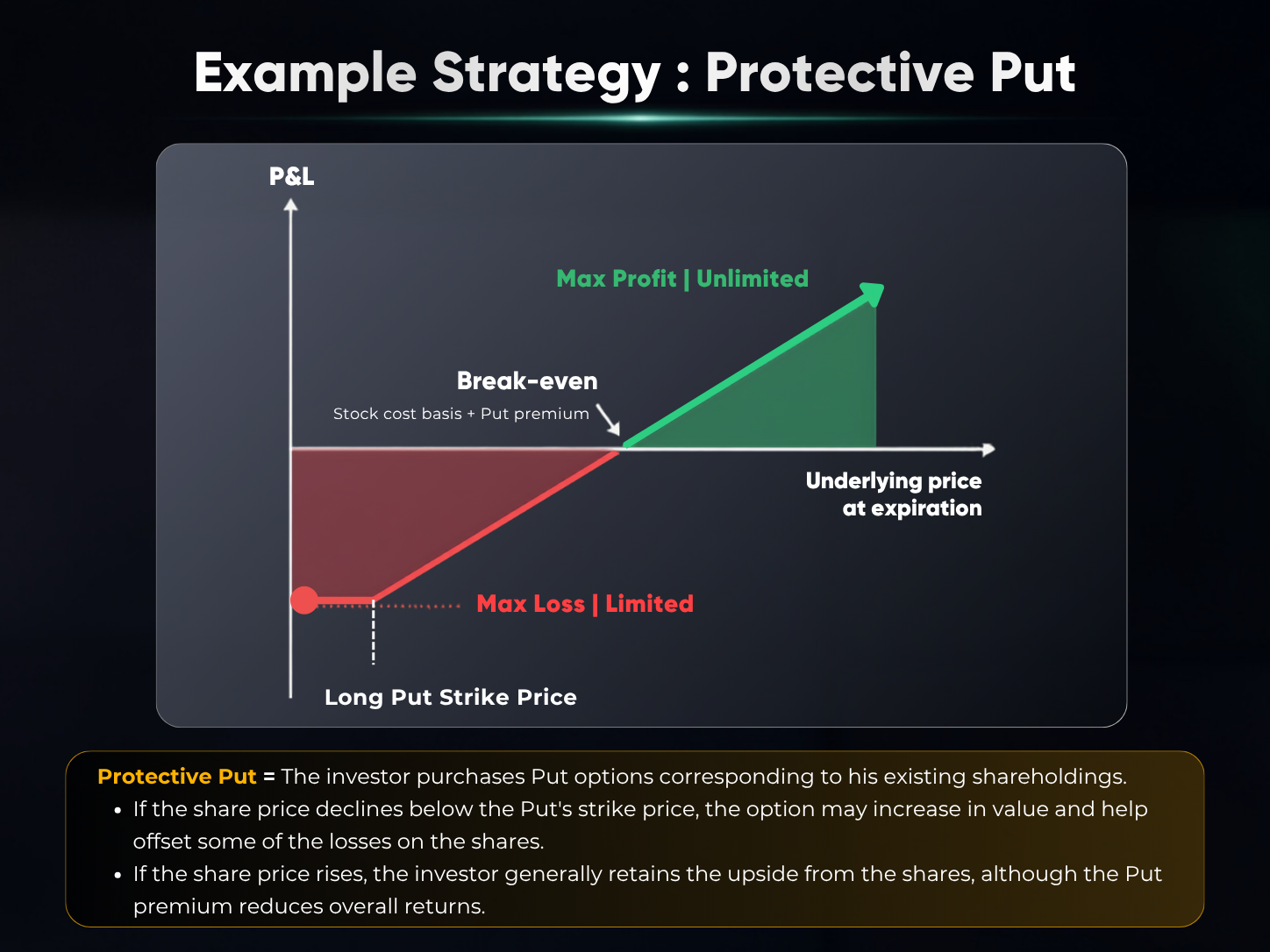
Example Strategy: Protective Put
Typical Position: An investor already holding shares.
Investment Goal: Hedge against downside risk while retaining potential upside.
Key Risk: Purchasing Put options requires paying a premium. Protection may be more expensive when implied volatility is elevated. If the share price falls only slightly or does not decline, the premium paid may reduce your overall investment returns.
4. Seeking Downside Protection at a Lower Cost?
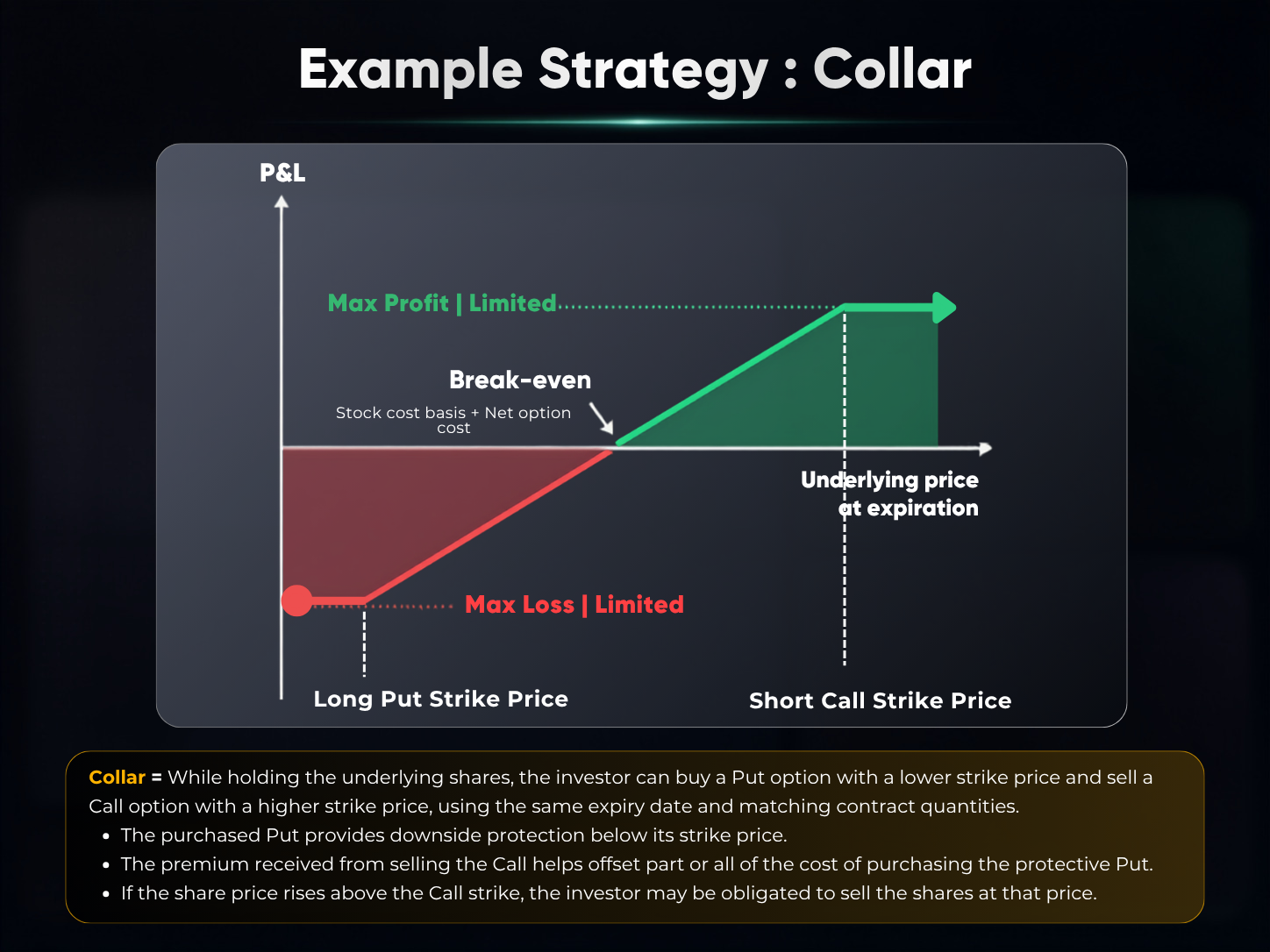
Example Strategy: Collar
Typical Position: An investor already holding shares and willing to limit potential upside.
Investment Goal: Reduce the cost of downside protection while accepting a cap on potential gains.
Key Risk: Potential gains are capped if the share price rises significantly. Losses may still occur if the share price falls sharply.
5. Expecting a Moderate Market Decline?
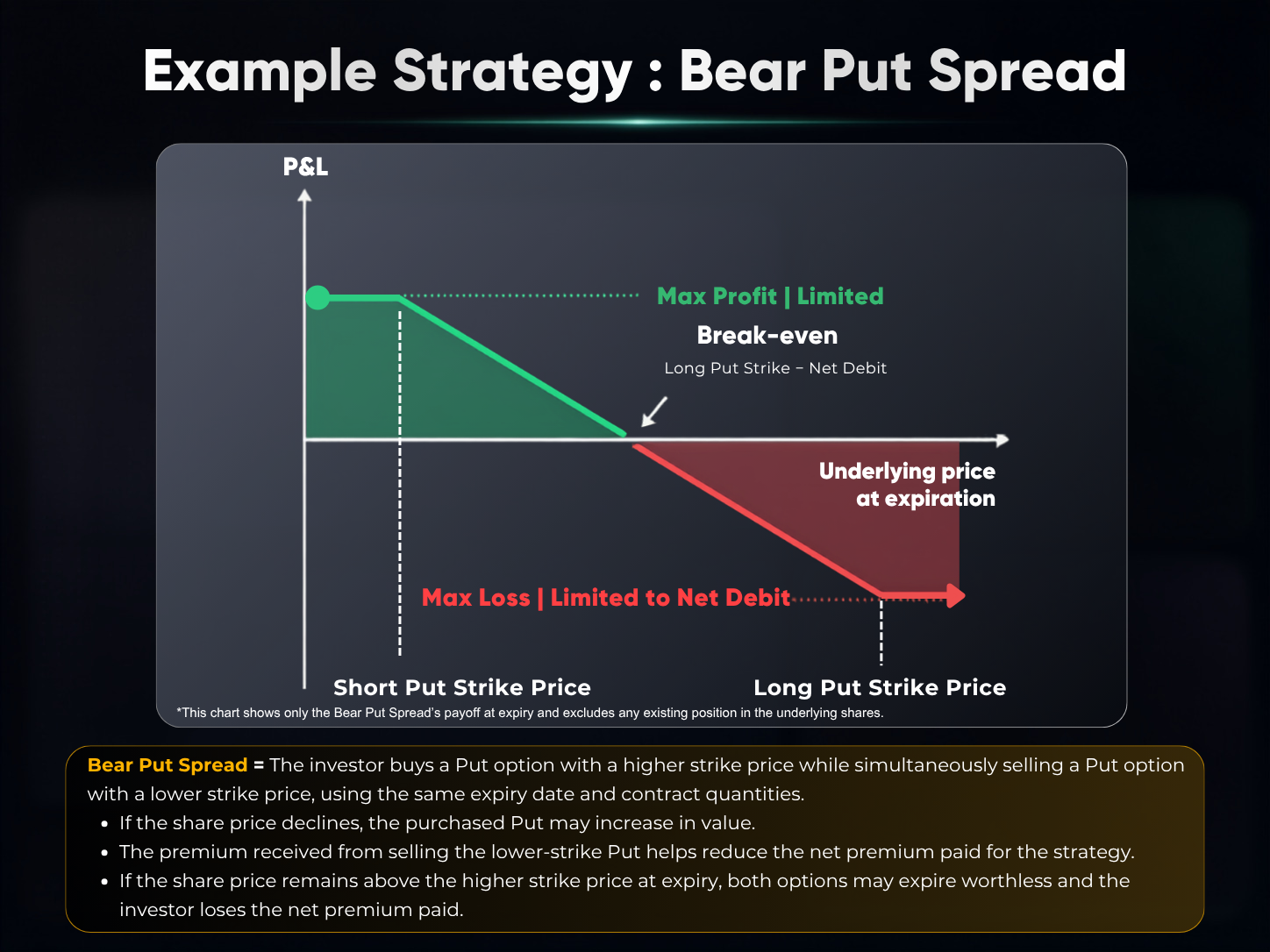
Example Strategy: Bear Put Spread
Typical Position: No existing shareholding is required, but the investor needs sufficient funds to cover the net option premium.
Investment Goal: Establish a bearish position with a limited upfront cost.
Key Risk: Maximum potential profit is limited to the difference between the two strike prices, less the net premium paid (before fees). The maximum potential loss is the entire net premium paid, plus associated fees.
Even if the share price declines, investors may still incur a partial or full loss if the decline is insufficient to cover the net premium paid and transaction costs.
The above strategies are for educational purposes only and do not constitute investment advice or recommendations.
Each carries different risks and potential returns. Investors should consider their goals, risk tolerance and financial circumstances before making decisions.