Bullish on the market and looking to buy at a lower price
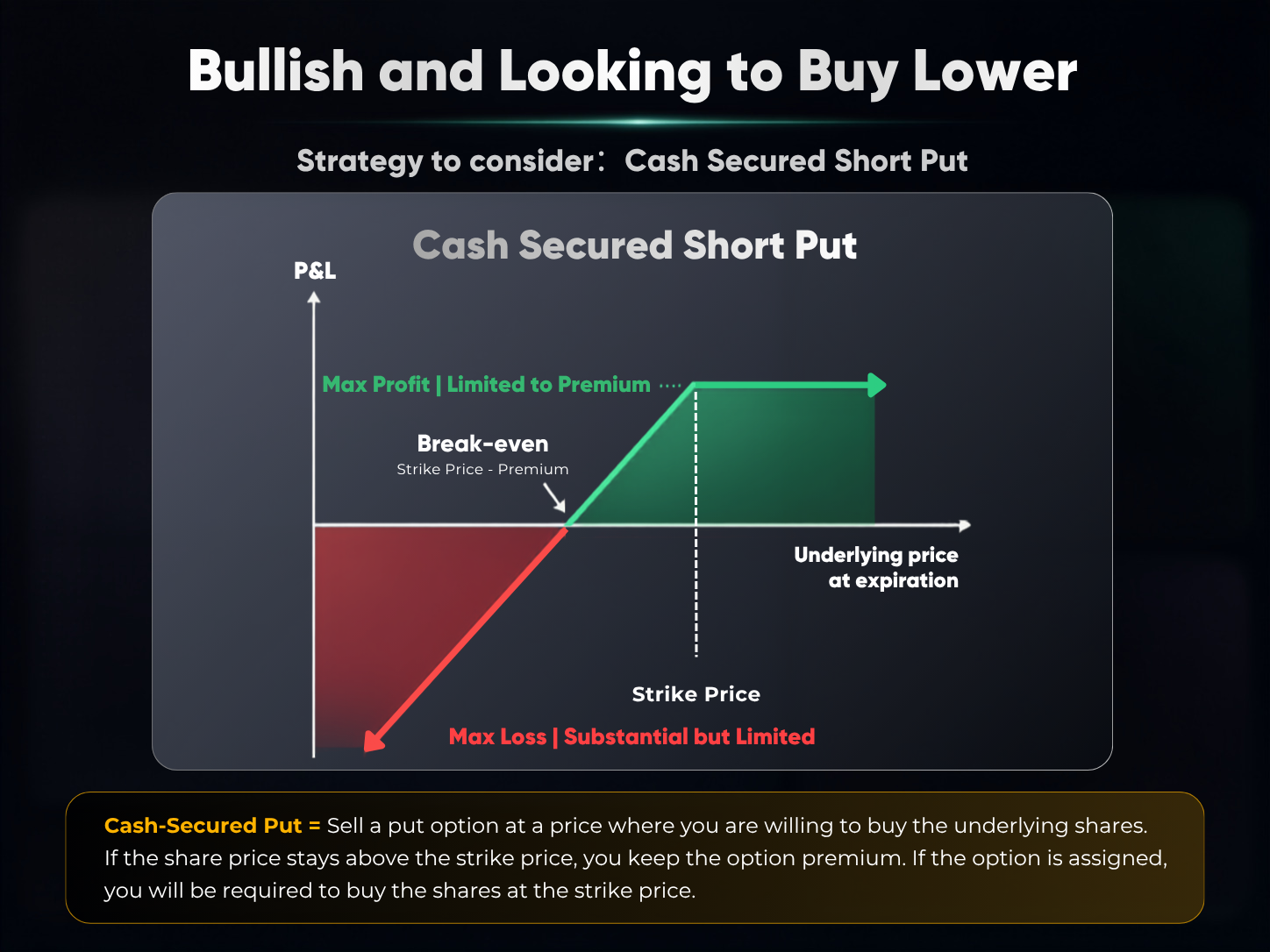
If investors are bullish on the market and looking to buy at a lower price, they may consider a Cash-Secured Put.
This strategy suits investors holding cash or a relatively small position, with funds available to invest further.
By selling a put at a strike price at which they are comfortable buying the shares, investors can earn option premium while potentially buying the shares at their preferred price.
If the share price remains above the strike price at expiry, investors retain the premium.
If assigned, they will need to buy the shares at the strike price.
Bullish on the market ans looking to generate additional income
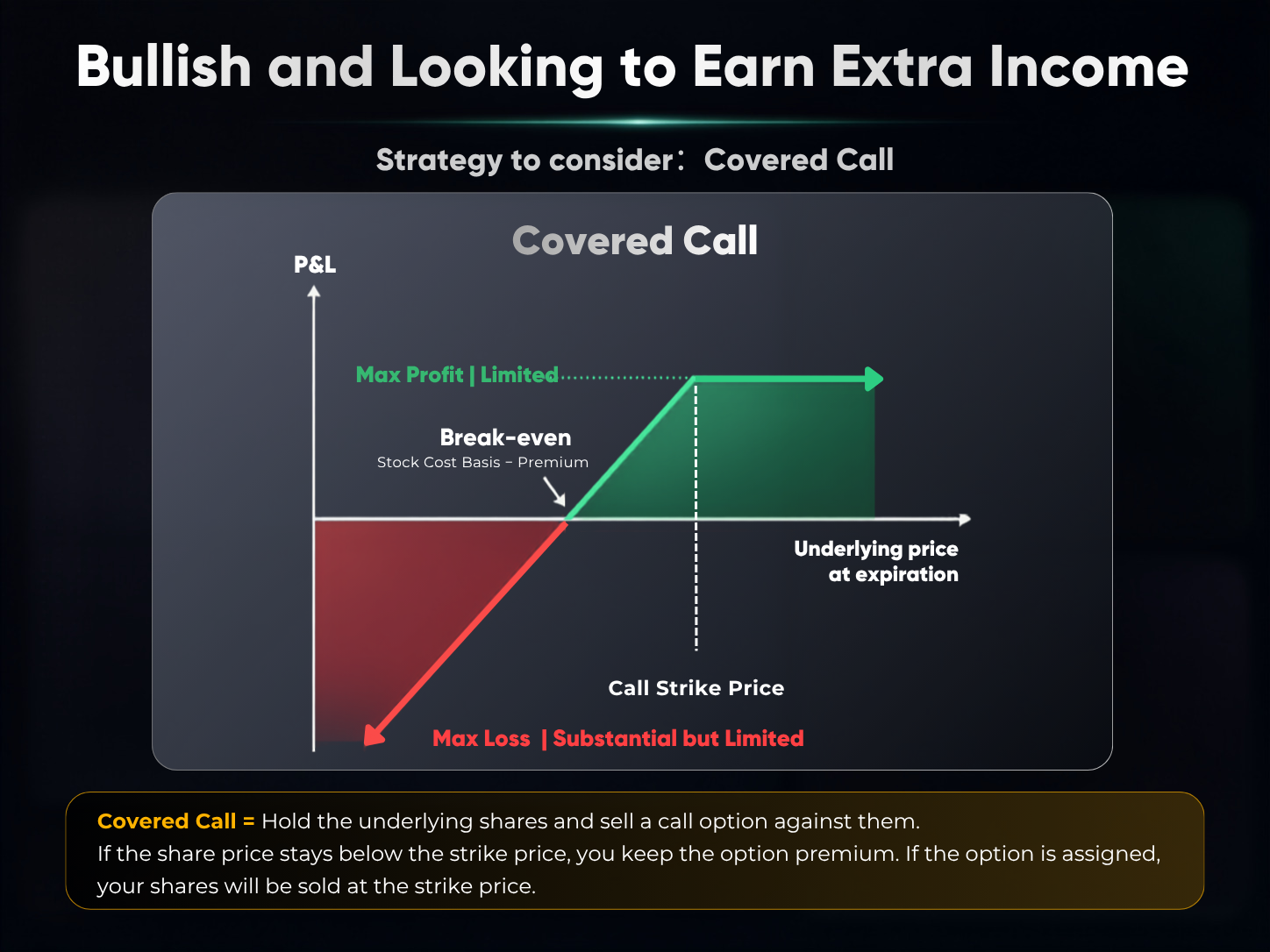
If the investor already holds the underlying shares and wants to generate additional income, the investor may consider a Covered Call.
This strategy involves holding the shares while selling a call option to collect option premium.
If the share price remains below the strike price at expiry, the investor retains the premium.
If assigned, the shares will be sold at the strike price.
Do note that potential gains may be capped if the share price rises significantly above the strike price.
Concerned that the market may pull back after the rebound
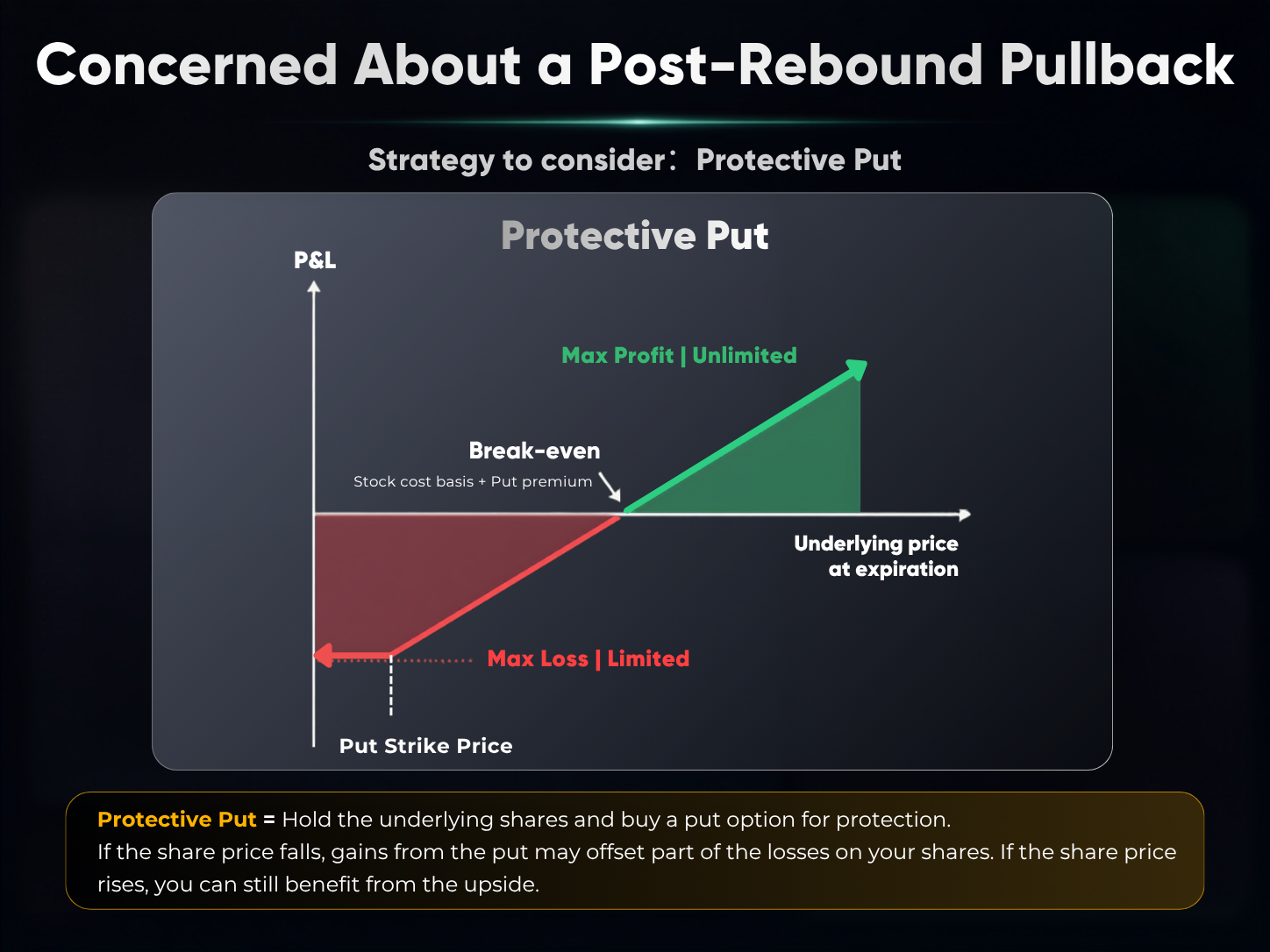
If the investor already holds the underlying shares and is concerned about a market pullback, the investor may consider a Protective Put.
This strategy involves holding the shares while purchasing a put option to hedge against downside risk while retaining potential upside.
If the share price falls, gains from the put may offset part of the losses on the shares.
If the share price rises, the investor can still benefit from the upside.
Do note that purchasing a put requires payment of a premium, which may be lost if the option expires worthless.
Looking to hedge risk while keeping costs lower
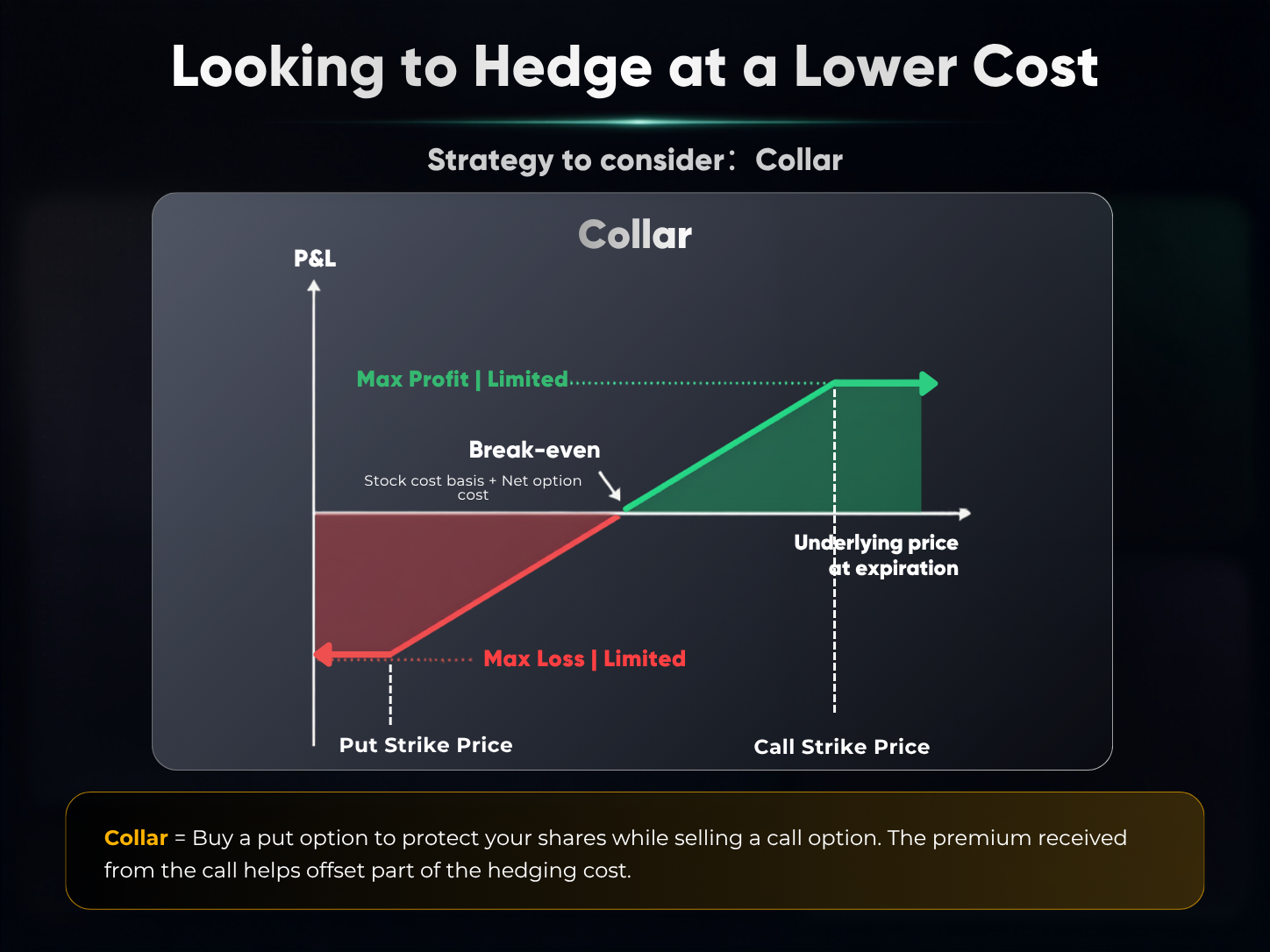
If investors already hold the underlying shares and want to limit downside risk while reducing the cost of protection, they may consider a Collar.
This strategy involves purchasing a put option for downside protection while selling a call option, with the premium received helping to offset part of the put cost.
It may suit investors who are prepared to give up some upside potential in exchange for lower hedging costs.
Do note that potential gains may be capped if the share price rises significantly above the call option strike price.
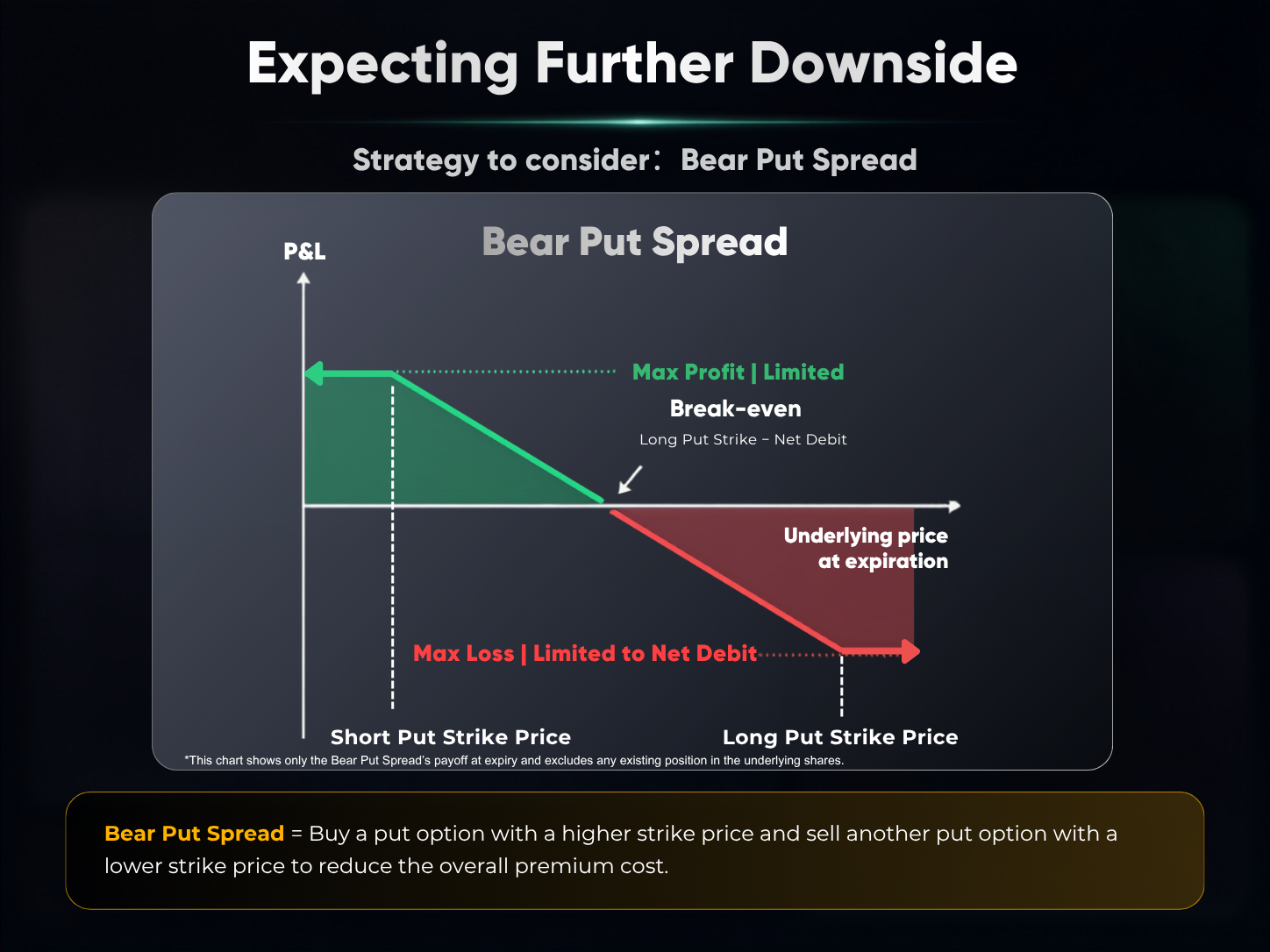
Expecting further downside
If investors expect further downside and want to limit downside risk while keeping costs under control, they may consider a Bear Put Spread.
This strategy involves purchasing a higher-strike put option and selling a lower-strike put option, with the premium received from the lower-strike put helping to reduce the overall cost.
It may suit investors who expect the share price to decline in the near term but believe the downside will be limited.
Do note that maximum profit is capped, and investors may lose the net premium paid if the share price does not fall.
Share Your Options Strategy
Share your market outlook, current positions and options strategy in a post of more than 20 words using # Navigating Market Pullbacks with Options topic to receive 100 Tiger Coins. The reward will be credited to your Rewards Center within 15 business days.