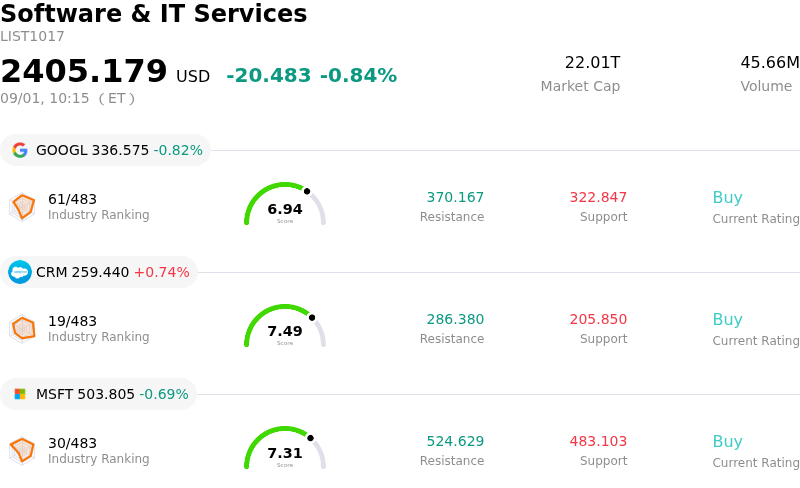
Oracle Corp (ORCL) moved down by 3.74%. The Software & IT Services sector is down by 0.84%. The company underperformed the industry. Top 3 stocks by turnover in the sector: Alphabet Inc Class A (GOOGL) down 0.78%; Salesforce Inc (CRM) up 0.74%; Microsoft Corp (MSFT) down 0.69%.
What is driving Oracle Corp (ORCL)’s stock price down today?
Oracle experienced downward pressure as a broader technology selloff, triggered by rising global bond yields and geopolitical friction, hit high-beta technology and artificial intelligence infrastructure providers particularly hard. Investors dialed back risk exposure across enterprise software and cloud infrastructure names, causing Oracle to underperform the broader market index. Market sentiment has been increasingly sensitive to capital intensity in the cloud sector, with investors demanding clearer signs of near-term monetization for heavy artificial intelligence investments.
Beyond macroeconomic headwinds, company-specific concerns regarding balance sheet leverage and aggressive capital expenditures continue to overhang Oracle. To build out its cloud infrastructure footprint, the company has significantly scaled up capital spending, leading to negative free cash flow and an increased debt burden. This aggressive expansion previously prompted credit rating agencies to lower Oracle's credit rating to the lower end of investment-grade territory, while widening credit default swap spreads reflected heightened balance sheet risk. Concerns regarding prospective equity dilution from ongoing capital raising and potential collateral requirements have kept institutional buyers cautious.
While Oracle retains a massive remaining performance obligation backlog driven by high-profile cloud agreements with major artificial intelligence developers, market focus has shifted from booking volume to execution efficiency. Disclosures indicating that only a minor fraction of the contracted backlog will convert into revenue over the next twelve months have raised questions about revenue conversion timelines. Furthermore, physical constraints in data center delivery and supply chain bottlenecks for advanced graphics processing units have sparked worry that capacity may not come online fast enough to offset near-term cash burn.
Despite these near-term headwinds, institutional sentiment remains divided between multi-year growth potential and short-term capital efficiency. Proponents argue that the unprecedented backlog provides strong revenue visibility once infrastructure comes online, while skeptics point to profit margin compression and refinancing risks in a higher-rate environment. Until Oracle demonstrates accelerated backlog conversion and improved cash flow metrics in upcoming quarterly reports, the stock is likely to remain subject to volatility in response to broader tech sector sentiment and credit market conditions.
Technical Analysis of Oracle Corp (ORCL)
Technically, Oracle Corp (ORCL) shows a MACD (12,26,9) value of 0.381, indicating a buy signal. The RSI at 48.398 suggests neutral condition and the Williams %R at 71.919 suggests sell condition. Please monitor closely.
Media Coverage of Oracle Corp (ORCL)
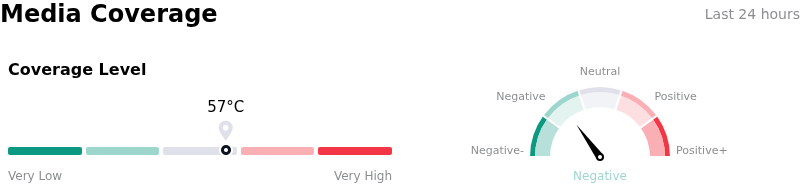
In terms of media coverage, Oracle Corp (ORCL) shows a coverage score of 57, indicating a moderate level of media attention. The overall market sentiment index is currently in bearish zone.
Fundamental Analysis of Oracle Corp (ORCL)
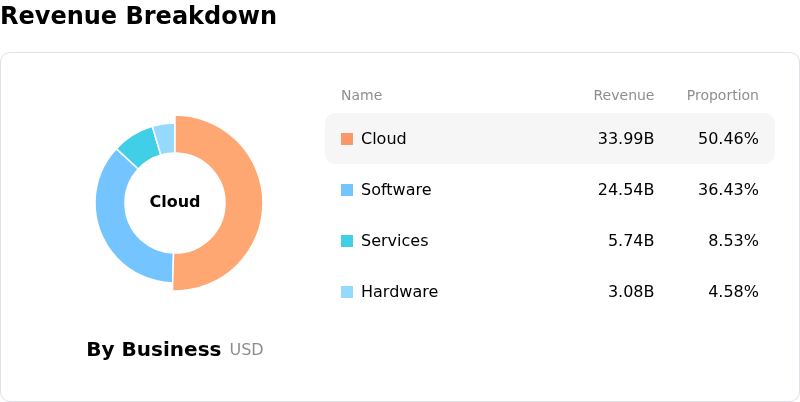
Oracle Corp (ORCL) is in the Software & IT Services industry. Its latest annual revenue is $67.36B, ranking 8 in the industry. The net profit is $16.98B, ranking 6 in the industry. Company Profile
Over the past month, multiple analysts have rated the company as Buy, with an average price target of $252.87, a high of $400.00, and a low of $110.00.
More details about Oracle Corp (ORCL)
Company Specific Risks:
- Credit Downgrade and Debt Escalation: S&P Global Ratings recently downgraded Oracle's credit rating to BBB-—just one notch above junk status—citing elevated leverage and heavy reliance on debt to finance AI infrastructure. Further downgrades risk triggering mandatory liquidations by investment-grade institutional funds and materially driving up future borrowing costs.
- Severe Free Cash Flow Deficits: Oracle's aggressive data center expansion has driven free cash flow into deep negative territory (-$23.7 billion), with projected fiscal 2027 capital expenditures climbing to $70 billion–$95 billion. This persistent cash burn leaves the company vulnerable to liquidity crunches and dilution if capital markets tighten.
- Extreme Customer Concentration in OpenAI: Approximately 50% of Oracle's $638 billion Remaining Performance Obligation (RPO) backlog is tied to a single client, OpenAI. Any scaling delays, financial strains, or counterparty disruptions at OpenAI pose an immediate threat of leaving multi-billion-dollar data center investments idle and unmonetized.
- AI Infrastructure Execution and Oversupply Friction: Institutional analysts and market short-sellers highlight growing execution risks surrounding high data center buildout costs, power grid constraints, and potential AI compute oversupply. Delayed backlog-to-revenue conversion threatens to compress operating margins before debt maturities come due.
Find out more