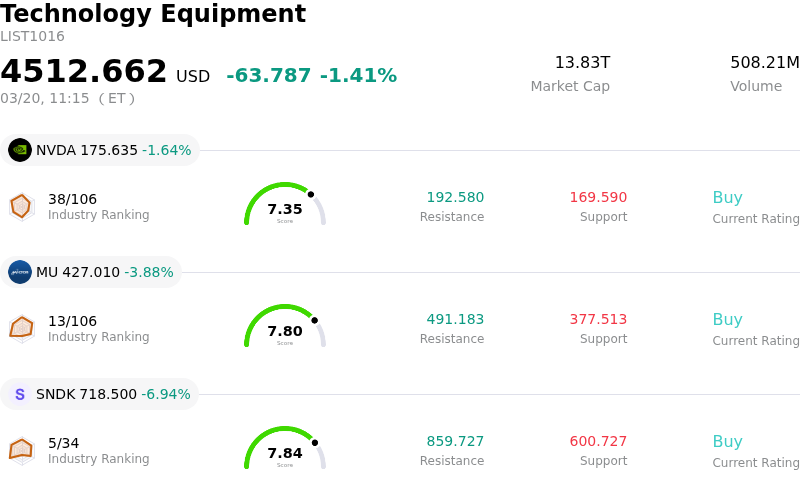
Taiwan Semiconductor Manufacturing Co Ltd (TSM) moved down by 3.01%. The Technology Equipment sector is down by 1.41%. The company underperformed the industry. Top 3 stocks by turnover in the sector: NVIDIA Corp (NVDA) down 1.64%; Micron Technology Inc (MU) down 3.88%; SanDisk Corporation (SNDK) down 6.94%.
What is driving Taiwan Semiconductor Manufacturing Co Ltd (TSM)’s stock price down today?
Several factors appear to be contributing to the negative intraday movement for Taiwan Semiconductor Manufacturing Company today. Heightened geopolitical tensions, both in the Taiwan Strait and the broader Middle East, are exerting downward pressure on market sentiment and, consequently, on the stock. Escalating rhetoric concerning Taiwan independence from Beijing, as highlighted by changes in China's 2026 policy reports, suggests an intensification of external security concerns for the region. Furthermore, the ongoing conflict in Iran is causing significant global market volatility, driving down overall stock performance and increasing short-term interest rates. This conflict also poses a direct risk to Taiwan's energy security, given the island's heavy reliance on Middle Eastern oil and natural gas imports. An extended crisis could lead to energy price spikes or rationing, potentially disrupting the critical semiconductor manufacturing process.
Adding to the pressure, the broader market is reflecting a more cautious stance from investors. The S&P 500, for instance, recently closed below its 200-day moving average, signaling a bearish technical trend. The intensifying Iran war is a key driver of this market downturn, causing stocks to hit fresh lows. Recent analyst adjustments have also likely played a role, with Zacks Research lowering its rating for TSM from "strong-buy" to "hold" earlier this week, and Weiss Ratings also reducing its stance from "buy" to "hold" in early March. While a consensus "Buy" rating for TSM remains, these downgrades can fuel negative sentiment in a volatile environment.
Despite these headwinds, TSM's underlying business fundamentals remain strong. The company reported robust earnings in its last quarter, with significant revenue growth driven by demand for high-performance computing. Forecasts for fiscal year 2026 indicate an accelerated compound annual growth rate for AI-related revenue, contributing to an overall positive revenue outlook. TSM also continues to dominate the global chip foundry market, particularly for advanced AI chips, and is strategically expanding its fabrication facilities worldwide to meet future demand. However, these positive company-specific drivers are currently being overshadowed by macroeconomic uncertainties and the pronounced geopolitical risks impacting investor confidence.
Technical Analysis of Taiwan Semiconductor Manufacturing Co Ltd (TSM)
Technically, Taiwan Semiconductor Manufacturing Co Ltd (TSM) shows a MACD (12,26,9) value of [-0.18], indicating a sell signal. The RSI at 43.64 suggests neutral condition and the Williams %R at -71.61 suggests oversold condition. Please monitor closely.
Fundamental Analysis of Taiwan Semiconductor Manufacturing Co Ltd (TSM)
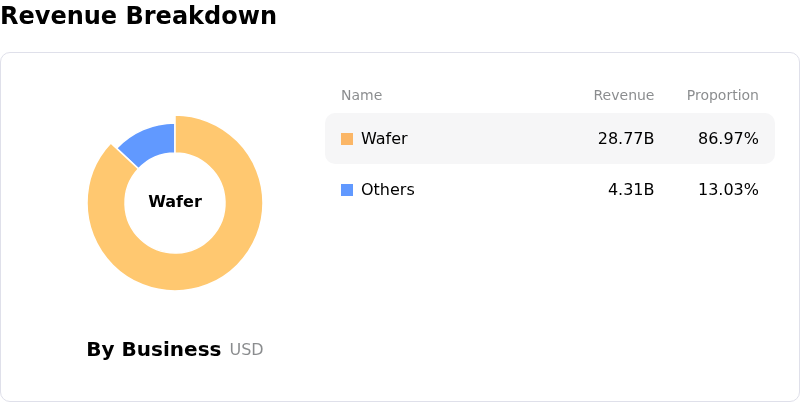
Taiwan Semiconductor Manufacturing Co Ltd (TSM) is in the Technology Equipment industry. Its latest annual revenue is $122.22B, ranking 2 in the industry. The net profit is $55.12B, ranking 2 in the industry. Company Profile
Over the past month, multiple analysts have rated the company as Buy, with an average price target of $410.08, a high of $520.00, and a low of $205.00.
More details about Taiwan Semiconductor Manufacturing Co Ltd (TSM)
Company Specific Risks:
- Escalating Middle East conflict and potential Strait of Hormuz disruption pose risks to critical supplies like LNG and sulfuric acid, along with increased energy costs for Taiwan-based fabrication plants, threatening TSMC's production stability.
- Samsung's win of Tesla's 2nm chip production, set to begin mass production in Texas by H2 2027, signifies increased competition and a potential loss of high-margin automotive sector market share as major clients diversify away from Taiwan-centric manufacturing.
- Reports of HBM4 memory shortages capable of delaying Nvidia's Rubin GPUs highlight a vulnerability to adjacent supply chain constraints, which could disrupt TSMC's customer timelines and foundry scheduling.
- Concerns about TSMC's relatively rich valuation persist among analysts, with warnings of potential multiple compression if the robust growth in AI demand does not meet high expectations.
Find out more