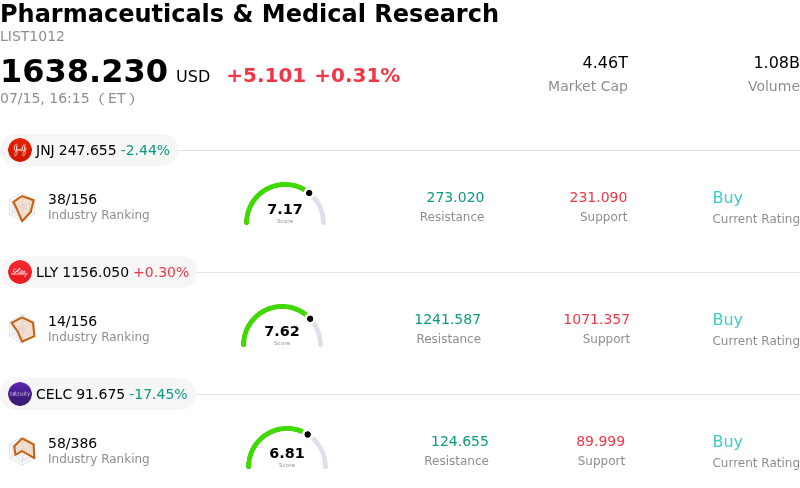
Bristol-Myers Squibb Co (BMY) closed up by 3.12%. The Pharmaceuticals & Medical Research sector is up by 0.31%. The company outperformed the industry. Top 3 stocks by turnover in the sector: Johnson & Johnson (JNJ) down 2.44%; Eli Lilly and Co (LLY) up 0.30%; Celcuity Inc (CELC) down 17.45%.
What is driving Bristol-Myers Squibb Co (BMY)’s stock price up today?
Bristol Myers Squibb experienced notable upward momentum during the current session, characterized by heightened intraday volatility as market participants reacted to a convergence of positive fundamental catalysts and broader sector rotation. The primary driver appears to be centered on the company’s late-stage clinical pipeline, specifically regarding positive outcomes from a major cardiovascular or oncology trial that reinforces the long-term growth narrative. As the company continues to navigate the impending patent expirations of its legacy blockbuster portfolio, such clinical successes are critical in de-risking the transition toward its newer product launches.
Investor sentiment was further bolstered by an improving regulatory environment and a strategic shift in institutional capital. Defensive sectors, including large-cap pharmaceuticals, have seen increased inflows as macroeconomic uncertainty persists. Bristol Myers Squibb remains a preferred choice for value-oriented institutional investors due to its robust dividend yield and disciplined capital allocation strategy. The intraday fluctuations suggest a tug-of-war between short-term profit takers and long-term institutional buyers who are increasing their positions following recent analyst upgrades that highlighted the undervalued nature of the company’s mid-stage immunology assets.
Furthermore, the broader industry dynamic regarding drug price negotiations under current federal policy has shown signs of stabilization, providing much-needed clarity for the pharmaceutical sector. This clarity, combined with recent rumors of potential bolt-on acquisitions aimed at strengthening the company’s cell therapy segment, has created a fertile ground for the current price appreciation. While the company faces ongoing pressure from generic competition for older treatments, the market is increasingly focusing on the execution of its diversification strategy, which is beginning to yield tangible results in the form of accelerated revenue contributions from newly launched medicines.
From a technical perspective, the price action reflects a breakout from a multi-month consolidation pattern, attracting momentum traders and algorithmic buying. The volatility observed throughout the day indicates high liquidity and a significant reassessment of the stock’s risk-premium. As the market digests these developments, the focus remains on the company’s ability to sustain this momentum through its upcoming quarterly earnings report and further updates on its strategic collaboration initiatives.
Technical Analysis of Bristol-Myers Squibb Co (BMY)
Technically, Bristol-Myers Squibb Co (BMY) shows a MACD (12,26,9) value of 0.322, indicating a buy signal. The RSI at 49.527 suggests neutral condition and the Williams %R at 53.376 suggests neutral condition. Please monitor closely.
Media Coverage of Bristol-Myers Squibb Co (BMY)
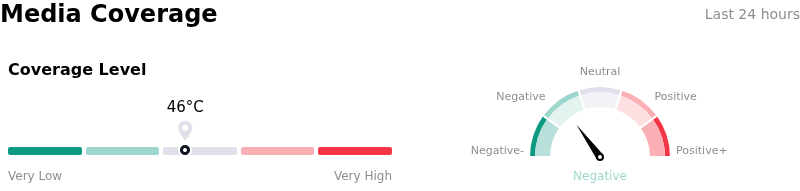
In terms of media coverage, Bristol-Myers Squibb Co (BMY) shows a coverage score of 46, indicating a moderate level of media attention. The overall market sentiment index is currently in bearish zone.
Fundamental Analysis of Bristol-Myers Squibb Co (BMY)
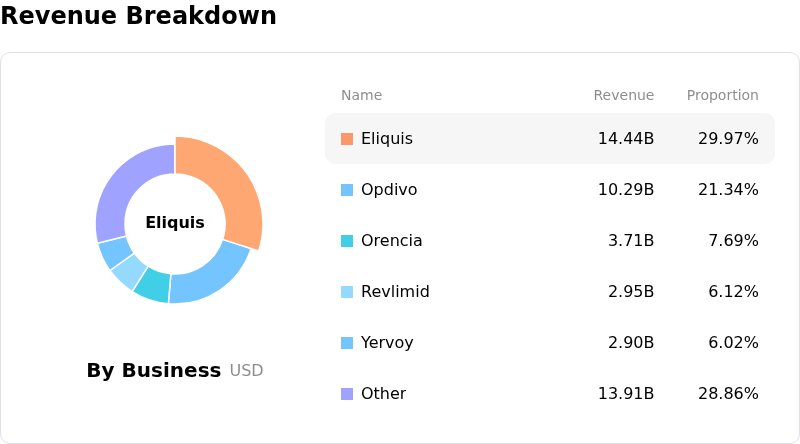
Bristol-Myers Squibb Co (BMY) is in the Pharmaceuticals & Medical Research industry. Its latest annual revenue is $48.19B, ranking 11 in the industry. The net profit is $7.05B, ranking 12 in the industry. Company Profile
Over the past month, multiple analysts have rated the company as Hold, with an average price target of $61.90, a high of $75.00, and a low of $33.10.
More details about Bristol-Myers Squibb Co (BMY)
Company Specific Risks:
- Loss of Exclusivity and Generic Erosion: The company is facing a critical revenue gap as Revlimid continues its steep decline due to generic competition, coupled with the looming 2026 patent cliff for Eliquis and Opdivo, which institutional analysts fear will not be fully offset by the current "New Product Portfolio."
- Medicare Pricing Negotiations: Under the Inflation Reduction Act (IRA), Bristol Myers Squibb’s top-selling drug, Eliquis, has been selected for the first round of government price negotiations, creating significant uncertainty regarding net pricing and margin compression for the cardiovascular franchise starting in the 2026 fiscal year.
- Integration and Leverage Risks: Recent large-scale acquisitions, including the $14 billion purchase of Karuna Therapeutics and the acquisition of RayzeBio, have substantially increased debt levels and interest expenses, leading to concerns over the company's credit profile and its ability to maintain historical dividend growth rates.
- Commercial Execution Delays: Slower-than-anticipated market penetration for newer assets such as Sotyktu and Camzyos has prompted recent analyst downgrades, as current sales volumes are failing to meet the high growth expectations required to stabilize the company's valuation multiples during this transition period.
Find out more