TradingKey - On August 14, Japanese and South Korean stock markets continued to close higher. The Korea Composite Stock Price Index (KOSPI) rose 2.41% to close at 6,977.34 points, while the Nikkei 225 Index closed up 0.59% at 68,713.80 points.
With a continuous rally this week, the KOSPI posted a cumulative weekly gain of 11.5%, snapping a seven-week losing streak.
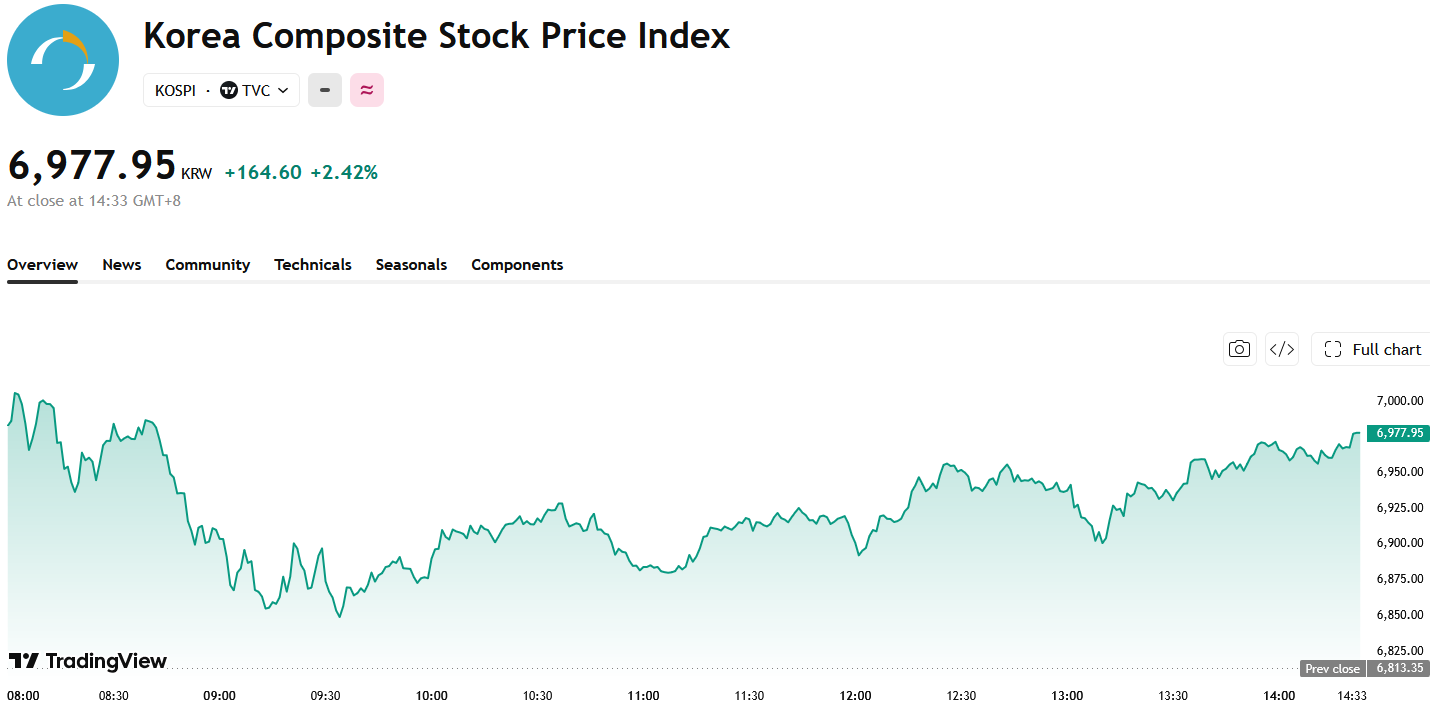
Source: TradingView
SK Hynix closed up 3.26% at 1,645,000 Korean won (about $1,160), while Samsung Electronics rose 2.43% to 274,500 won.
In the Japanese market, Kioxia gained 3.75% to close at 53,740 yen (about $338), and SoftBank Group rose 2.94% to 5,739 yen, as Asian tech stocks maintained overall strength.
Overnight, SanDisk (SNDK) announced that after completing its investment business, it will return remaining excess cash to shareholders. The news pushed its stock price up over 13% and drove Asian memory chip stocks higher in tandem.
Meanwhile, SK Group Chairman Chey Tae-won stated on August 14 that the company is considering building new memory chip plants through a joint venture model to share high capital expenditure burdens and potential overcapacity risks under semiconductor cycle fluctuations.
He also pointed out that the current tight supply of memory chips could intensify further in 2027. If the supply-demand deficit continues to widen, memory chip prices and corporate profitability may retain strong support, and the medium- to long-term fundamentals of South Korean memory leaders like SK Hynix are expected to continue benefiting.
In addition, foreign capital inflows have become an important driving force behind the rebound in South Korean equities. Data shows that as of Thursday, foreign investors had net bought roughly $2 billion in South Korean stocks this week. If inflows continue on Friday, the South Korean stock market is expected to record its largest weekly foreign net inflow since early April.
In contrast, the South Korean stock market suffered continuous capital outflows in the first few months of this year, with cumulative net outflows exceeding $100 billion. As a large volume of leveraged positions accumulated earlier in the AI and semiconductor sectors were unwound, previous market volatility moderated, creating conditions for foreign capital to reallocate.
Find out more