SpaceX (SPCX) moved down by 3.29%. The Telecommunications Services sector is down by 2.10%. The company underperformed the industry. Top 3 stocks by turnover in the sector: SpaceX (SPCX) down 3.29%; Verizon Communications Inc (VZ) up 0.96%; AT&T Inc (T) up 1.41%.
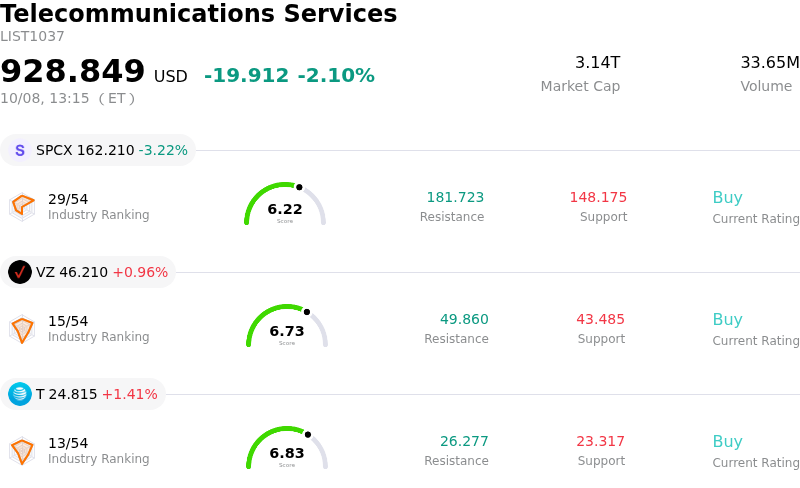
What is driving SpaceX (SPCX)’s stock price down today?
The pull back in Space Exploration Technologies Corp shares was primarily driven by growing nervousness among fixed-income and equity investors regarding the company's aggressive borrowing plans. Reports that the company is seeking to raise significant debt financing through bank loans and investment-grade bonds to acquire advanced artificial intelligence hardware from Nvidia sparked immediate balance sheet concerns. Credit default swap spreads for the company rose to record levels, underscoring debt market anxiety over the scale of liabilities being added to fund its expanding AI compute infrastructure and Starlink operations.
The negative sentiment also reflects heightened sensitivity around the stock's elevated valuation relative to its current profitability profile. Following a strong multi-day rally, investors seized on the debt announcements as a catalyst to take profits. While high growth is expected across space launch services, satellite broadband, and AI infrastructure rentals, the company remains unprofitable and cash-flow negative due to heavy capital expenditure. Adding a substantial debt burden increases financial leverage and execution risk, making the stock vulnerable to pullbacks when macro or credit market conditions tighten.
Looking ahead, institutional sentiment is caught between long-term enthusiasm for new growth avenues and short-term leverage risks. While bullish analysts point to rising compute-rental demand and potential upside catalysts from upcoming milestones, fixed-income markets continue to demand higher yield premiums. Investors will likely focus on upcoming quarterly earnings reports and details surrounding debt servicing strategy to gauge whether high-margin AI revenue streams can materialize quickly enough to offset rising financial costs.
Technical Analysis of SpaceX (SPCX)
Technically, SpaceX (SPCX) shows a MACD (12,26,9) value of 2.842, indicating a buy signal. The RSI at 58.494 suggests neutral condition and the Williams %R at 45.541 suggests neutral condition. Please monitor closely.
Fundamental Analysis of SpaceX (SPCX)
SpaceX (SPCX) is in the Telecommunications Services industry. Its latest annual revenue is $18.67B, ranking 10 in the industry. The net profit is $-4.94B, ranking 61 in the industry. Company Profile
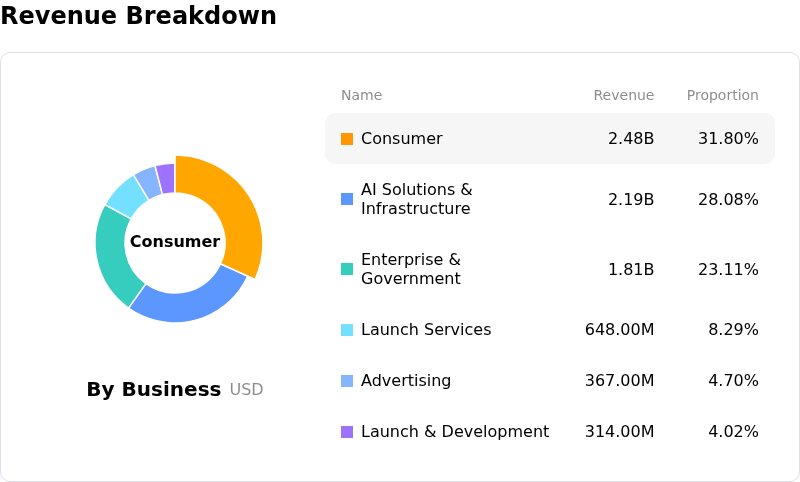
Over the past month, multiple analysts have rated the company as Buy, with an average price target of $229.54, a high of $800.00, and a low of $100.00.
More details about SpaceX (SPCX)
Company Specific Risks:
- Imminent Share Lockup Expirations and Supply Overhang: Market sentiment is under pressure as 328.4 million shares become eligible for insider sale on October 9, followed by an additional 328.4 million shares on October 24 and up to 1.3 billion shares following third-quarter earnings, creating severe near-term supply dilution risks.
- Severe Leverage Burden from Proposed $40 Billion Debt Package: Reports indicating the company is seeking $40 billion in debt financing—comprising $10 billion in bank loans and $30 billion in investment-grade bonds—to fund Nvidia GPU purchases have raised institutional alarms regarding balance sheet leverage, interest drag, and record-high credit default swap costs.
- Institutional Net Selling and Elevated Valuation Metrics: Institutional caution has escalated following disclosures that ARK Invest sold $9.4 million in equity, complemented by net ETF selling of $54.6 million in a single session, as investors question the sustainability of a price-to-sales multiple exceeding 120x while operating losses persist.
- Operational Setbacks and Starship Program Delays: Fresh reports of Starship launch delays and technical hurdles have triggered intraday pullbacks, highlighting ongoing execution risks in the core launch segment required to maintain heavy payload throughput and low-Earth orbit deployment schedules.
Find out more